2024_1_corr_10012.jpg
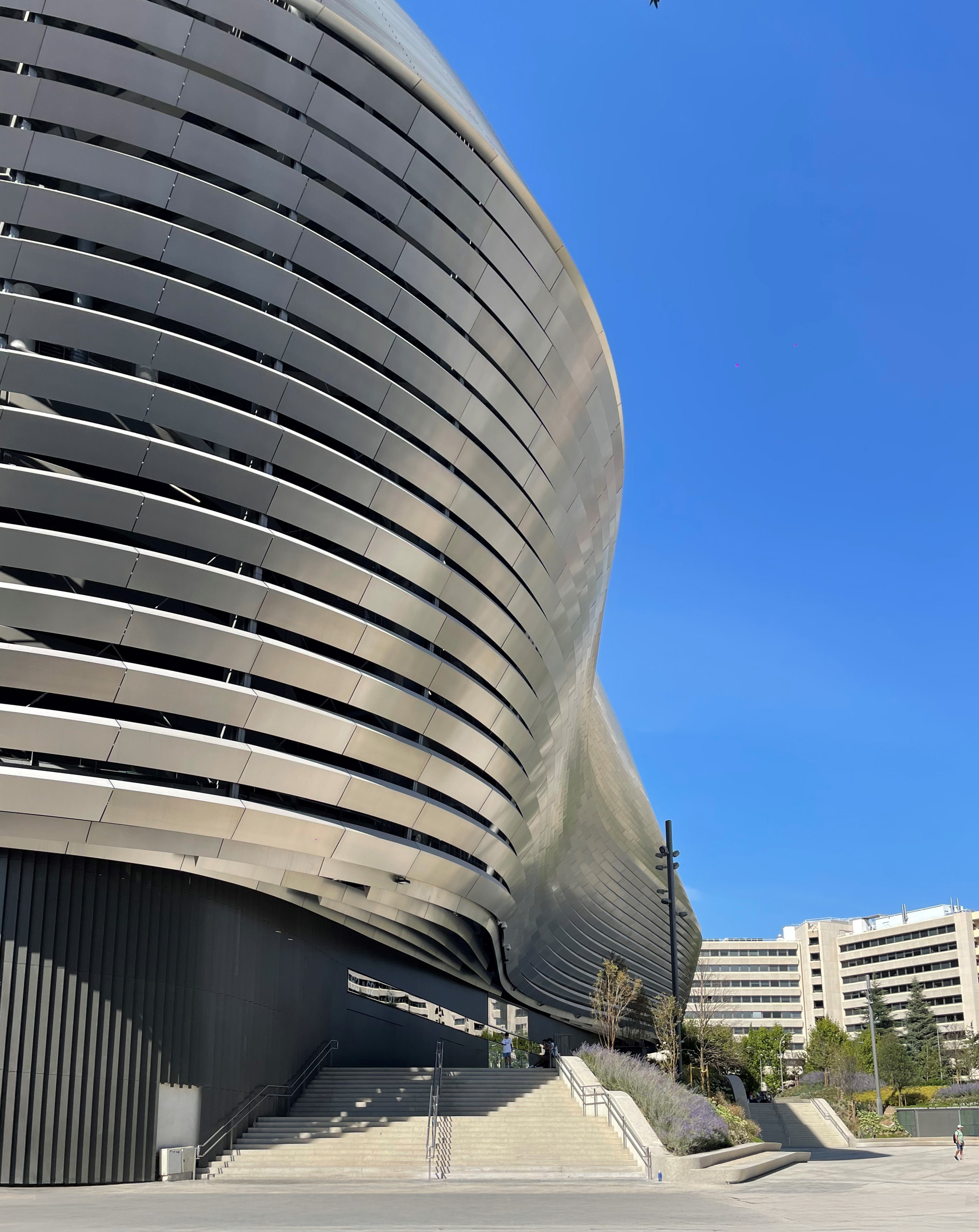
Bernabéu Stadium Renovation. Façade, East Building and Videoboard
Madrid, Spain
Structural typology Stadiums
Date Dezember, 2023
Umfang Detailed design and construction support
Cliente FCC Construccion S.A.
Architect Concept Design: GMP/L35/Ribas, Executive Design: TYPSA
Construction FCC Construccion S.A.
Owner Real Madrid
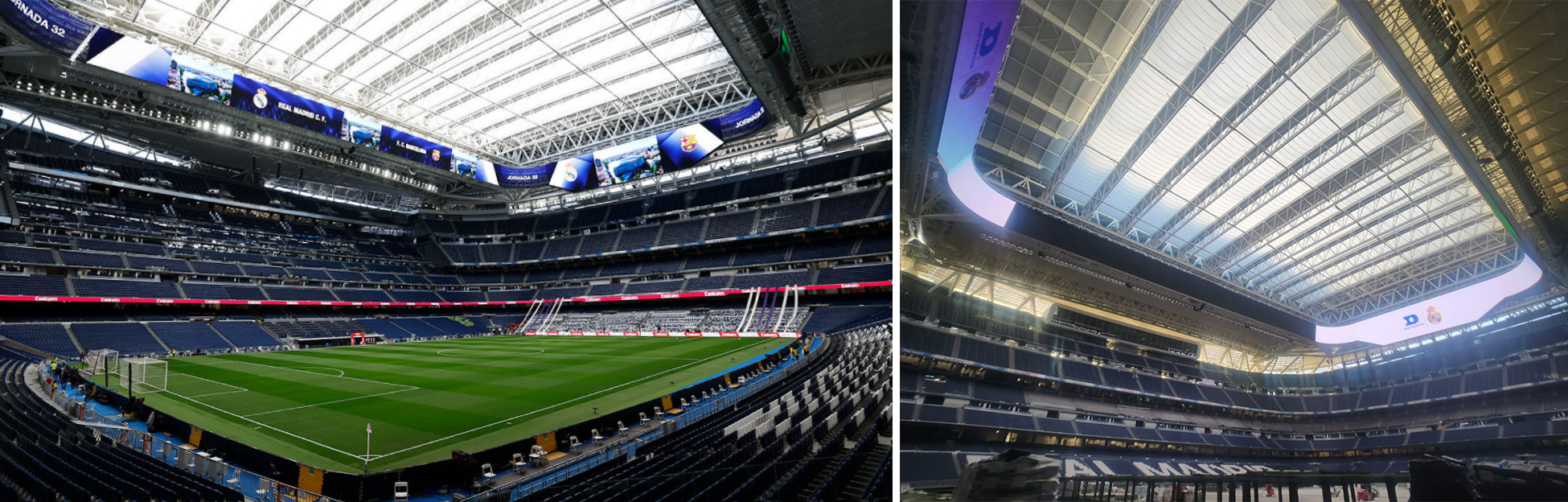
Since its inauguration in 1947, the stadium has undergone numerous refurbishments and extensions; however, the most ambitious and significant intervention can be considered the one carried out between 2019 and 2023. This latest renovation aimed to transform the stadium into a fully covered, multi-purpose venue, endowed with a contemporary and iconic image.

The renovation of the stadium was carried out by FCC Construcción under a fast-track delivery model, with design and construction developed simultaneously, while maintaining the stadium in regular operation throughout the works. Fhecor collaborated on the design and construction of the stadium façade structure, the new East Building (located along Padre Damián Street), and the supporting structure for the videoboard.
Pro
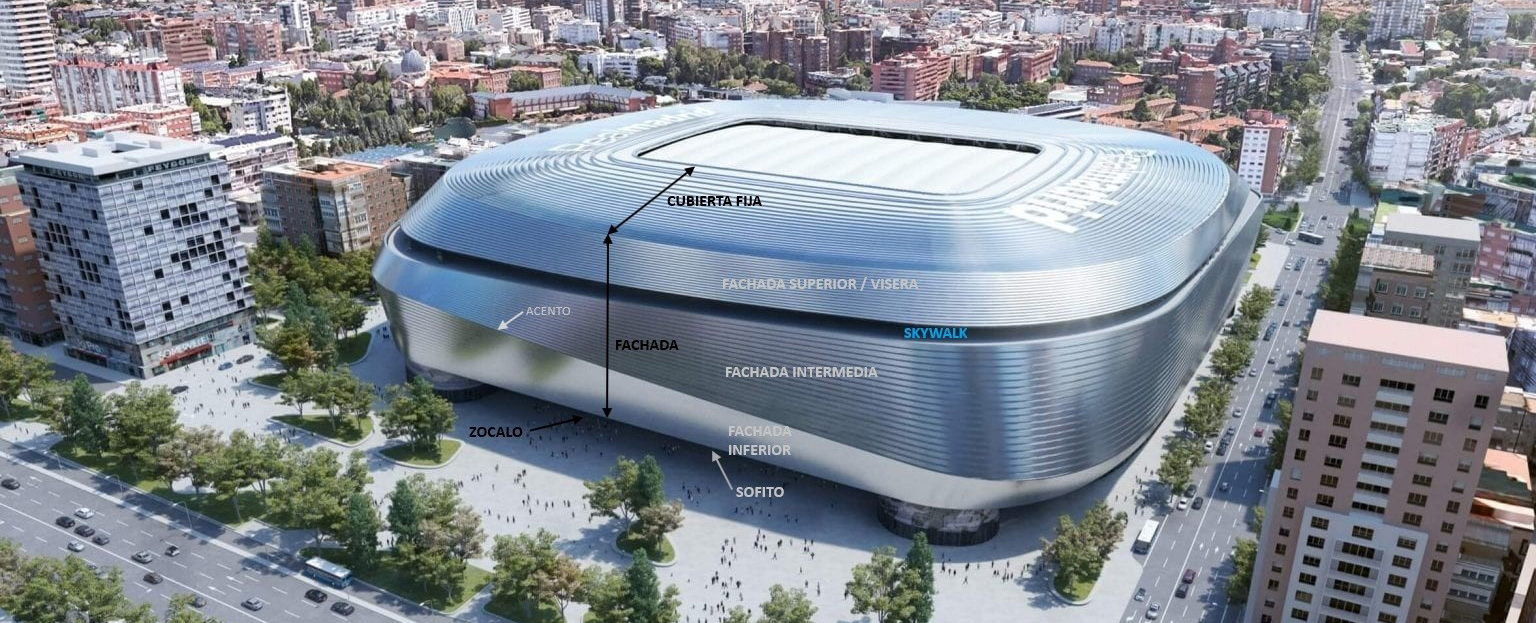
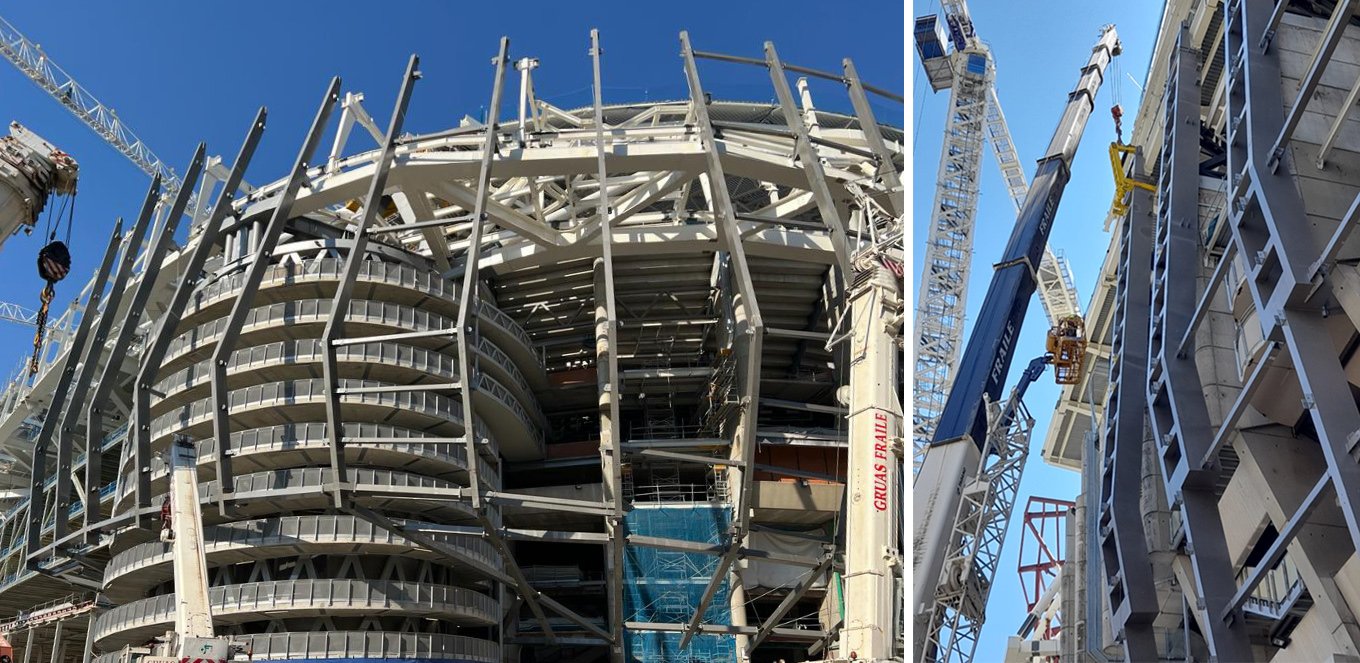
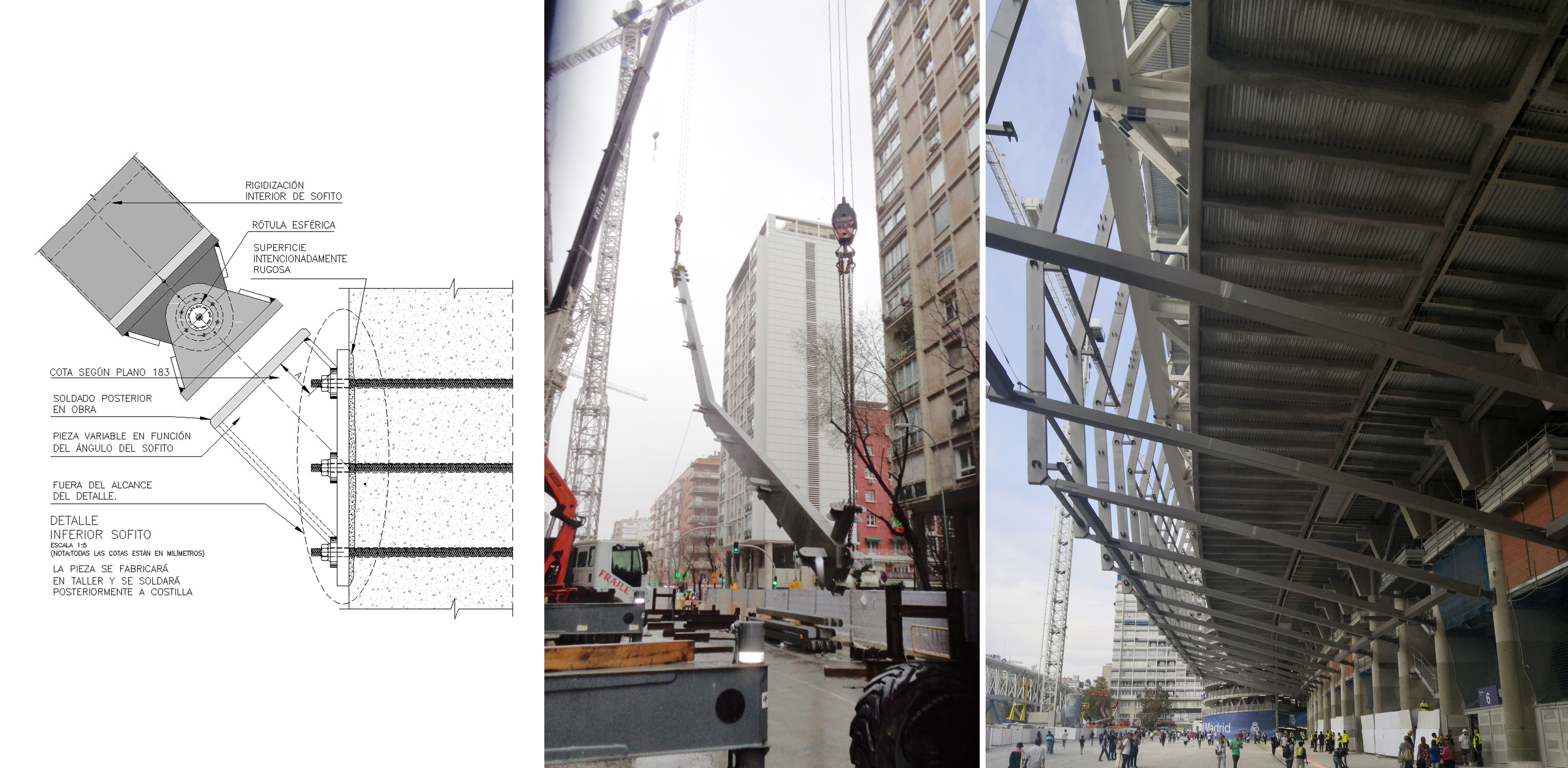
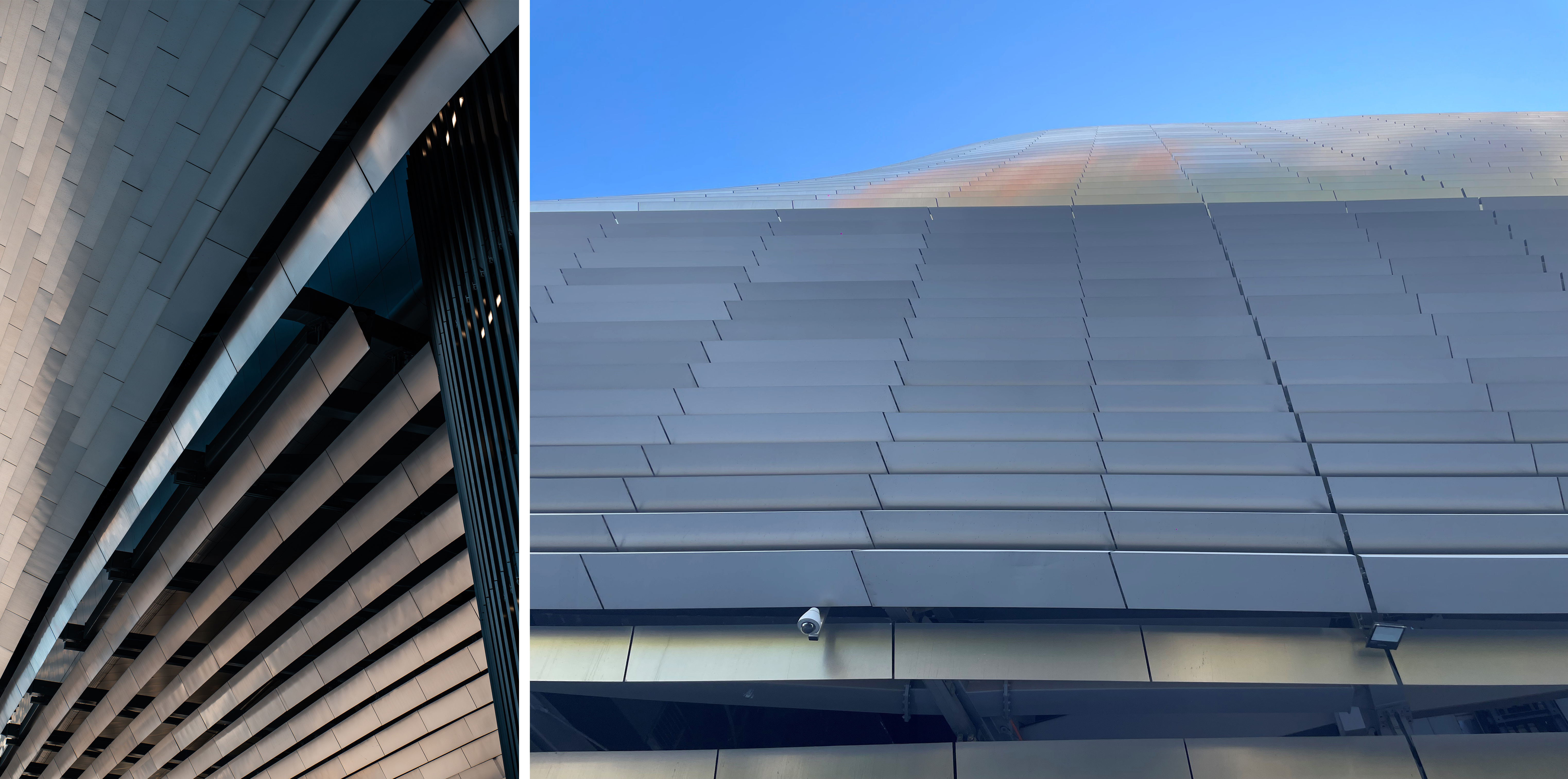
The façade structure consists of 118 vertical ribs of varying geometry, reaching up to 40 m in length and covering a total surface area of 39,218 m² (equivalent to 5.5 football pitches). These ribs, which support the slats of the façade envelope, are suspended at their upper ends from the roof perimeter—formed by the ring girders of the East and West buildings and the fixed roof over the North and South stands—and are connected at their lower ends to the existing reinforced concrete structure of the stadium by means of quasi-horizontal struts that define the façade soffit. The structural design allows the load-bearing function of the façade to be combined with the accommodation of functional movements of the roof.

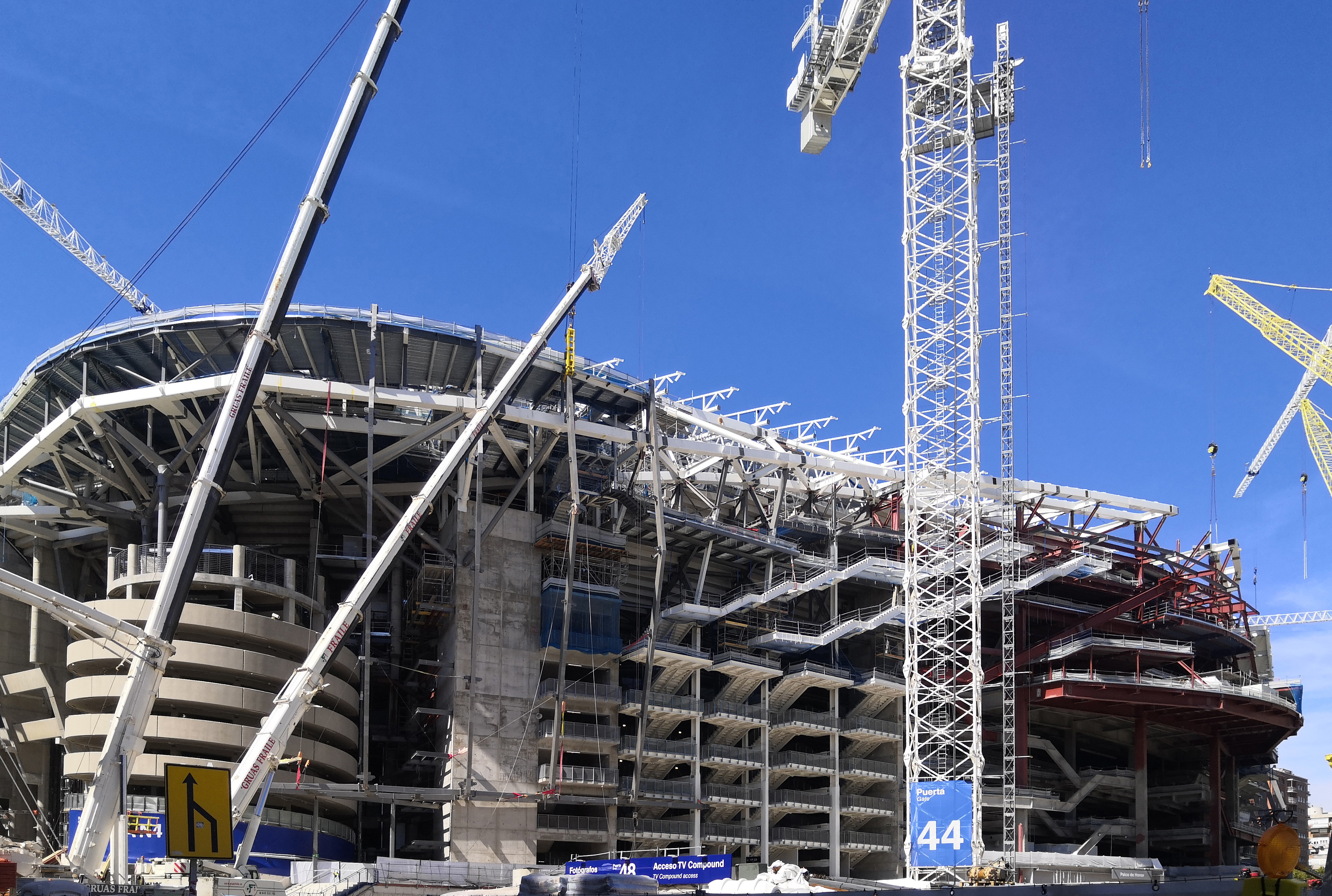
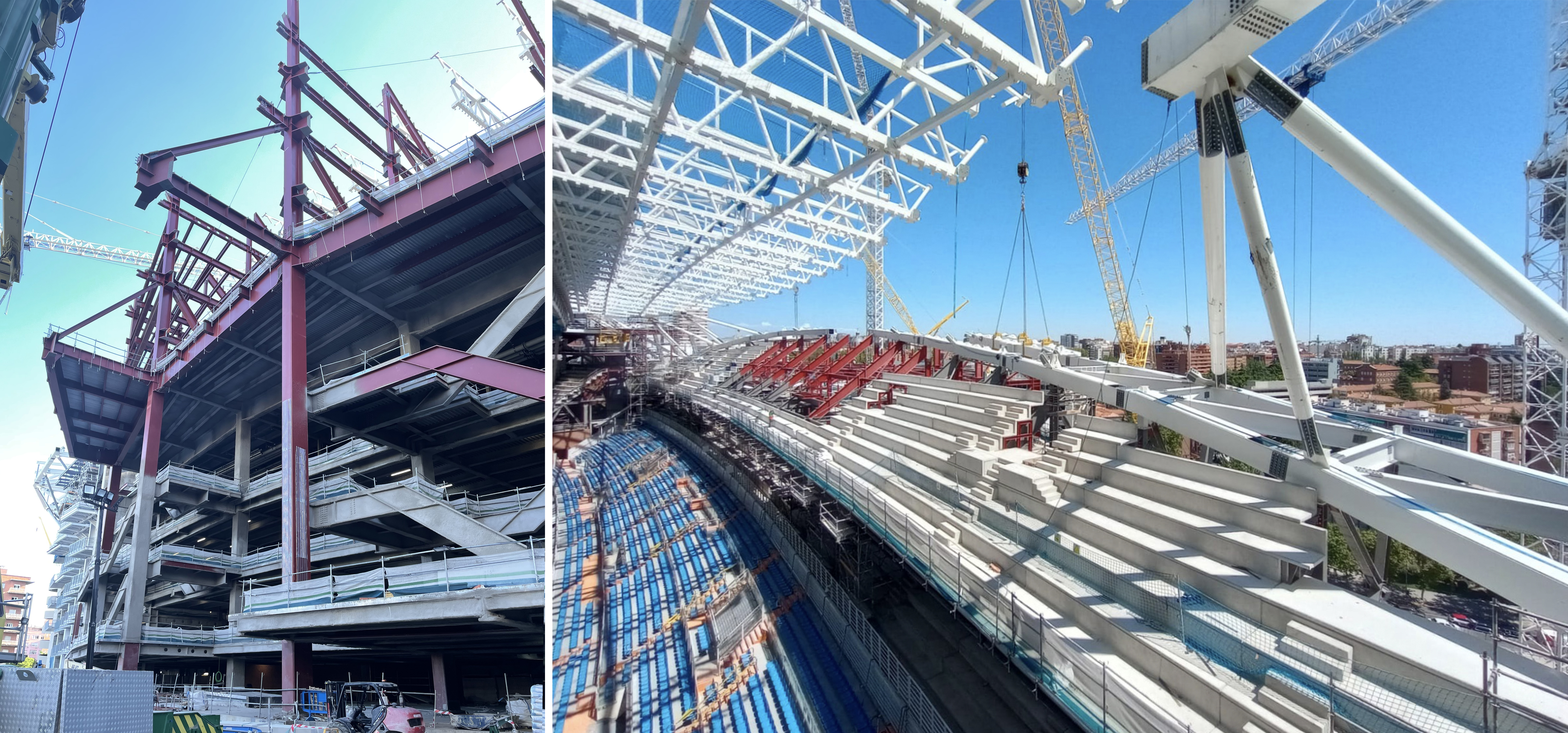
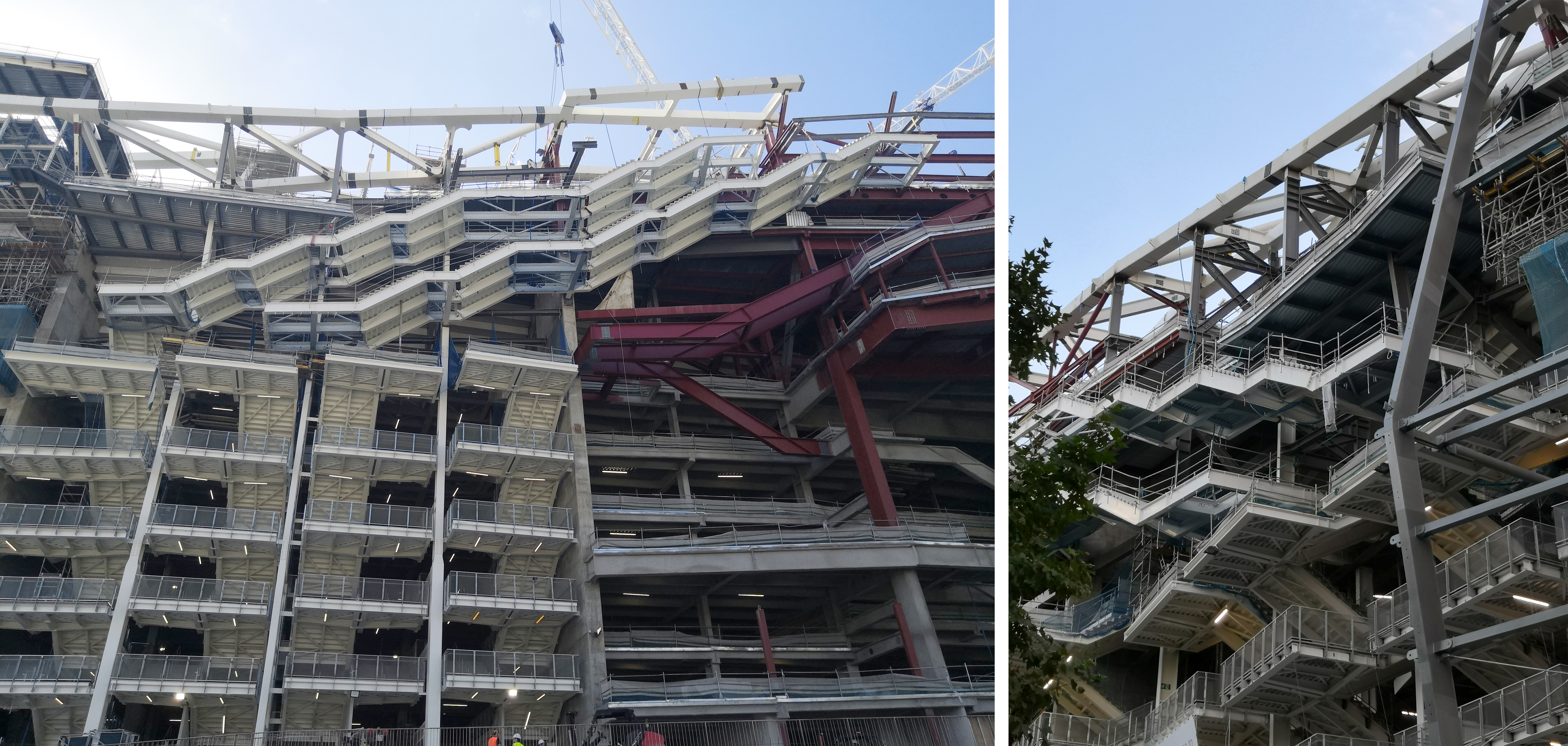
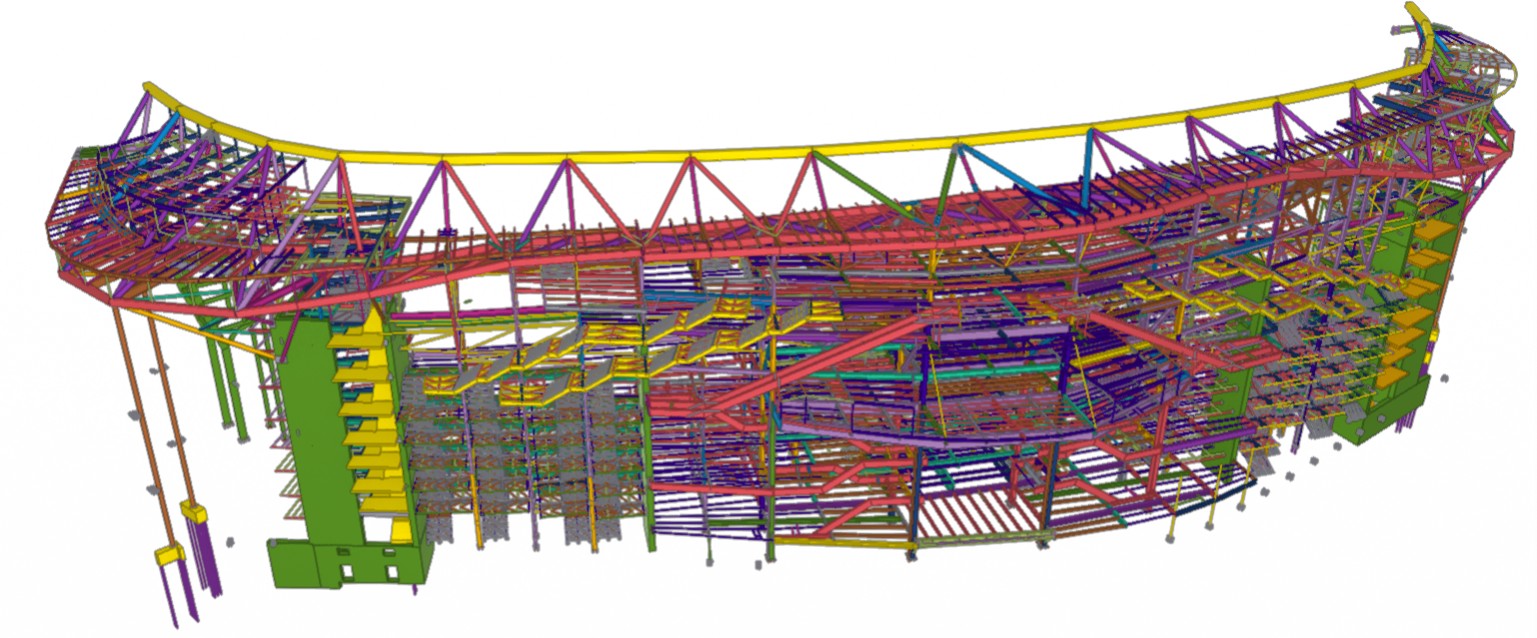
The East Building has been designed with a steel structure to accommodate the wide variety of required spaces, uses and functions: two tiers of seating, office areas, the presidential zone, evacuation staircases, and the skywalk, among others. To achieve this, it was necessary to design trusses, transfer girders and large cantilevered elements, including staircases and even the ring girder itself, which cantilevers over the building and provides transverse support for the roof, while also housing office, technical and leisure areas, and accommodating the skywalk. Its approximate volume is 165 × 25 × 50 m = 206,250 m³ (almost 83 Olympic swimming pools).
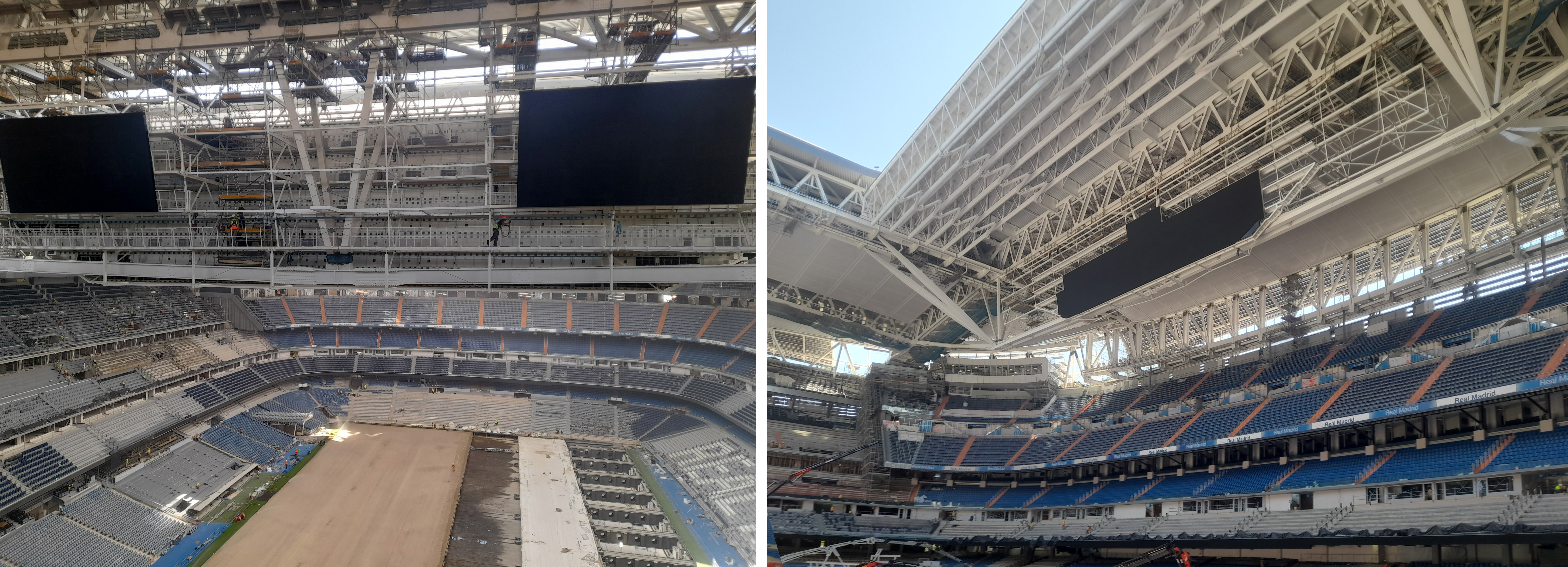
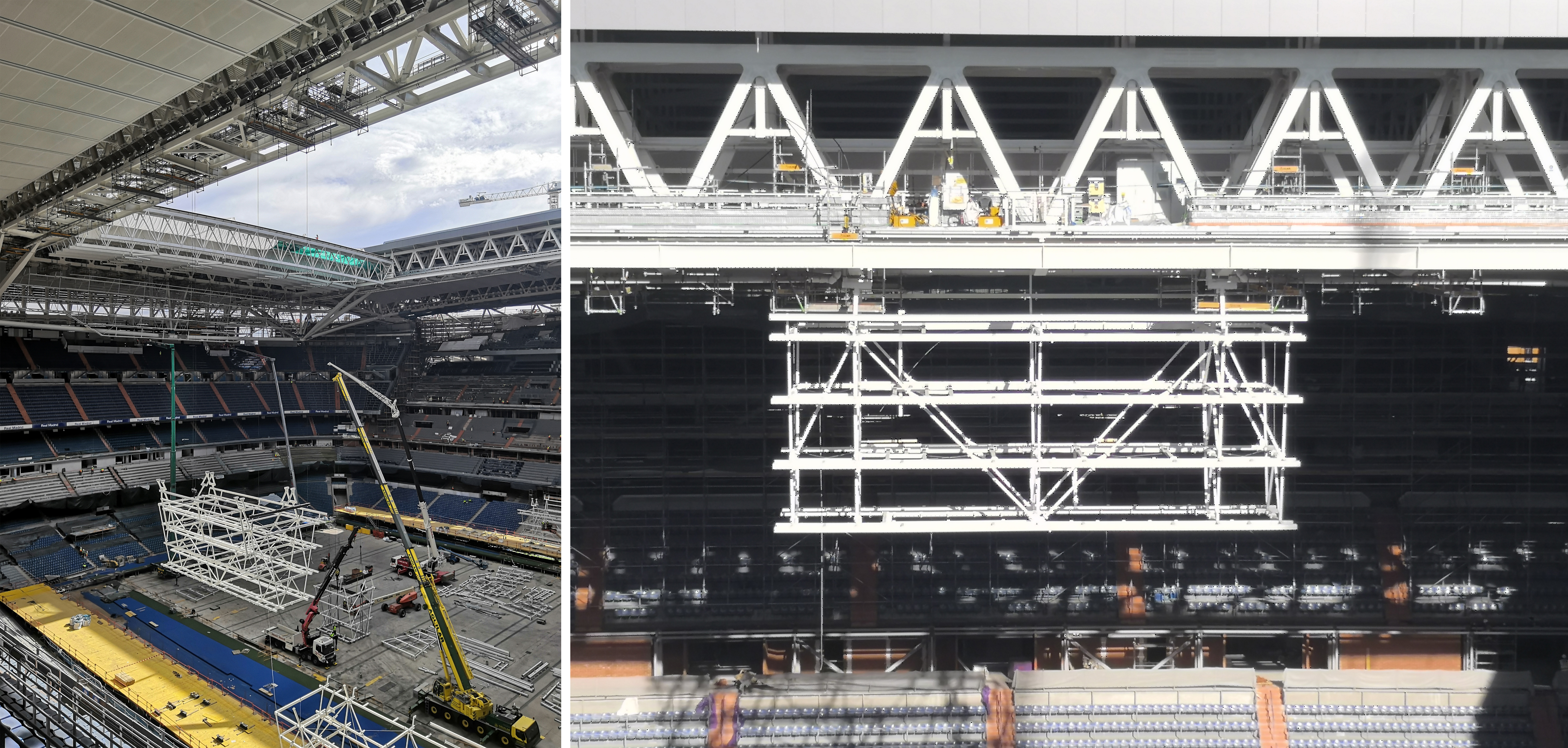
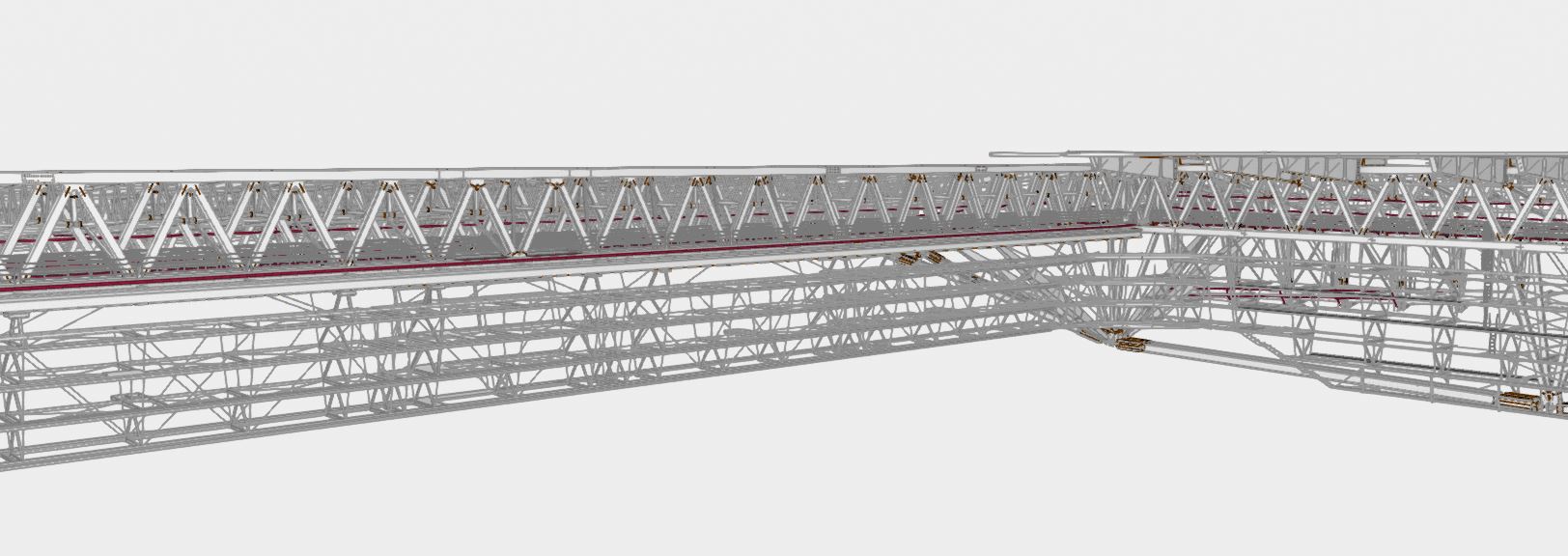
For the videoboard support structure, a steel structure was designed that combines the stiffness required to avoid any impact on image quality with the flexibility needed to accommodate roof movements caused by live loads and the operation of the retractable roof. The total surface area of all the screens exceeds 3,700 m², representing an area greater than half of the playing field.

In addition to the detailed design of these structures, Fhecor also provided technical assistance during construction, resolving issues and adapting the design to the realities of the site. The use of BIM methodology was fundamental for the execution of all this work, both during the design phase and throughout construction.

For further details, the following articles from journal "Hormigón y Acero" #307 (ACHE) can be consulted:

- Façade structure
- East Building
- Videoboard support structure
Since its inauguration in 1947, the stadium has undergone numerous refurbishments and extensions; however, the most ambitious and significant intervention can be considered the one carried out between 2019 and 2023. This latest renovation aimed to transform the stadium into a fully covered, multi-purpose venue, endowed with a contemporary and iconic image.

The renovation of the stadium was carried out by FCC Construcción under a fast-track delivery model, with design and construction developed simultaneously, while maintaining the stadium in regular operation throughout the works. Fhecor collaborated on the design and construction of the stadium façade structure, the new East Building (located along Padre Damián Street), and the supporting structure for the videoboard.

The façade structure consists of 118 vertical ribs of varying geometry, reaching up to 40 m in length and covering a total surface area of 39,218 m² (equivalent to 5.5 football pitches). These ribs, which support the slats of the façade envelope, are suspended at their upper ends from the roof perimeter—formed by the ring girders of the East and West buildings and the fixed roof over the North and South stands—and are connected at their lower ends to the existing reinforced concrete structure of the stadium by means of quasi-horizontal struts that define the façade soffit. The structural design allows the load-bearing function of the façade to be combined with the accommodation of functional movements of the roof.

The East Building has been designed with a steel structure to accommodate the wide variety of required spaces, uses and functions: two tiers of seating, office areas, the presidential zone, evacuation staircases, and the skywalk, among others. To achieve this, it was necessary to design trusses, transfer girders and large cantilevered elements, including staircases and even the ring girder itself, which cantilevers over the building and provides transverse support for the roof, while also housing office, technical and leisure areas, and accommodating the skywalk. Its approximate volume is 165 × 25 × 50 m = 206,250 m³ (almost 83 Olympic swimming pools).
For the videoboard support structure, a steel structure was designed that combines the stiffness required to avoid any impact on image quality with the flexibility needed to accommodate roof movements caused by live loads and the operation of the retractable roof. The total surface area of all the screens exceeds 3,700 m², representing an area greater than half of the playing field.

In addition to the detailed design of these structures, Fhecor also provided technical assistance during construction, resolving issues and adapting the design to the realities of the site. The use of BIM methodology was fundamental for the execution of all this work, both during the design phase and throughout construction.

For further details, the following articles from journal "Hormigón y Acero" #307 (ACHE) can be consulted:

- Façade structure
- East Building
- Videoboard support structure

Bernabéu Stadium Renovation. Façade, East Building and Videoboard
Madrid, Spain
Structural typology Stadiums
Date Dezember, 2023
Umfang Detailed design and construction support
Cliente FCC Construccion S.A.
Architect Concept Design: GMP/L35/Ribas, Executive Design: TYPSA
Construction FCC Construccion S.A.
Owner Real Madrid
Since its inauguration in 1947, the stadium has undergone numerous refurbishments and extensions; however, the most ambitious and significant intervention can be considered the one carried out between 2019 and 2023. This latest renovation aimed to transform the stadium into a fully covered, multi-purpose venue, endowed with a contemporary and iconic image.

The renovation of the stadium was carried out by FCC Construcción under a fast-track delivery model, with design and construction developed simultaneously, while maintaining the stadium in regular operation throughout the works. Fhecor collaborated on the design and construction of the stadium façade structure, the new East Building (located along Padre Damián Street), and the supporting structure for the videoboard.

The façade structure consists of 118 vertical ribs of varying geometry, reaching up to 40 m in length and covering a total surface area of 39,218 m² (equivalent to 5.5 football pitches). These ribs, which support the slats of the façade envelope, are suspended at their upper ends from the roof perimeter—formed by the ring girders of the East and West buildings and the fixed roof over the North and South stands—and are connected at their lower ends to the existing reinforced concrete structure of the stadium by means of quasi-horizontal struts that define the façade soffit. The structural design allows the load-bearing function of the façade to be combined with the accommodation of functional movements of the roof.

The East Building has been designed with a steel structure to accommodate the wide variety of required spaces, uses and functions: two tiers of seating, office areas, the presidential zone, evacuation staircases, and the skywalk, among others. To achieve this, it was necessary to design trusses, transfer girders and large cantilevered elements, including staircases and even the ring girder itself, which cantilevers over the building and provides transverse support for the roof, while also housing office, technical and leisure areas, and accommodating the skywalk. Its approximate volume is 165 × 25 × 50 m = 206,250 m³ (almost 83 Olympic swimming pools).

For the videoboard support structure, a steel structure was designed that combines the stiffness required to avoid any impact on image quality with the flexibility needed to accommodate roof movements caused by live loads and the operation of the retractable roof. The total surface area of all the screens exceeds 3,700 m², representing an area greater than half of the playing field.

In addition to the detailed design of these structures, Fhecor also provided technical assistance during construction, resolving issues and adapting the design to the realities of the site. The use of BIM methodology was fundamental for the execution of all this work, both during the design phase and throughout construction.

For further details, the following articles from journal "Hormigón y Acero" #307 (ACHE) can be consulted:

- Façade structure
- East Building
- Videoboard support structure


edifioc este_tit_10796.jpg
IMG_20220917_142732 fly_10807.jpg
compo 2_10812.jpg
compo_10806.jpg
Modelo BIM_10811.jpg
fachada tit_10797.jpg
Figura 1. Parte de la envolvente y de la Fachada. Vista desde el Oeste fly_10813.jpg
compo web fachada 1_10799.jpg
compo web fachada 2_10800.jpg
compo web fachada 3_10808.jpg
video_tit_10798.jpg
compo 1_10803.jpg
compo 2_10804.jpg
compo 3_10805.jpg
Vista Bajo Cubierta_10802.JPG
Standort
Related projects