portada_11049.jpg
Replacement of the Puente Nuevo over the Oria River
Tolosa, Spain
Structural typology Tender Design
Date 2025
Scope Tender design
Design Fhecor
Tolosa has forged its identity over eight centuries around the Oria River and its bridges. Among them all, the Puente Nuevo—inaugurated on February 12, 1926—holds a privileged place not only due to its historical significance but also for its pivotal role in the urban modernization and consolidation of Tolosa as a regional mobility hub during the industrial boom of the early 20th century.

Designed by architect Guillermo Eizaguirre with a groundbreaking design for its time, the Puente Nuevo (originally called Puente de la Travesía or Puente de los Fueros) features a reinforced concrete structure with four spans of 12.75 m each (total length: 51 m). However, the same design that provided functionality in 1926 has become its main limitation in the 21st century. Built without sufficient hydraulic capacity for extreme flooding, recent hydraulic studies by the Basque Water Agency (URA) show that the bridge acts as a funnel, exacerbating recurrent floods in the urban core.

Proposed Replacement Structure:
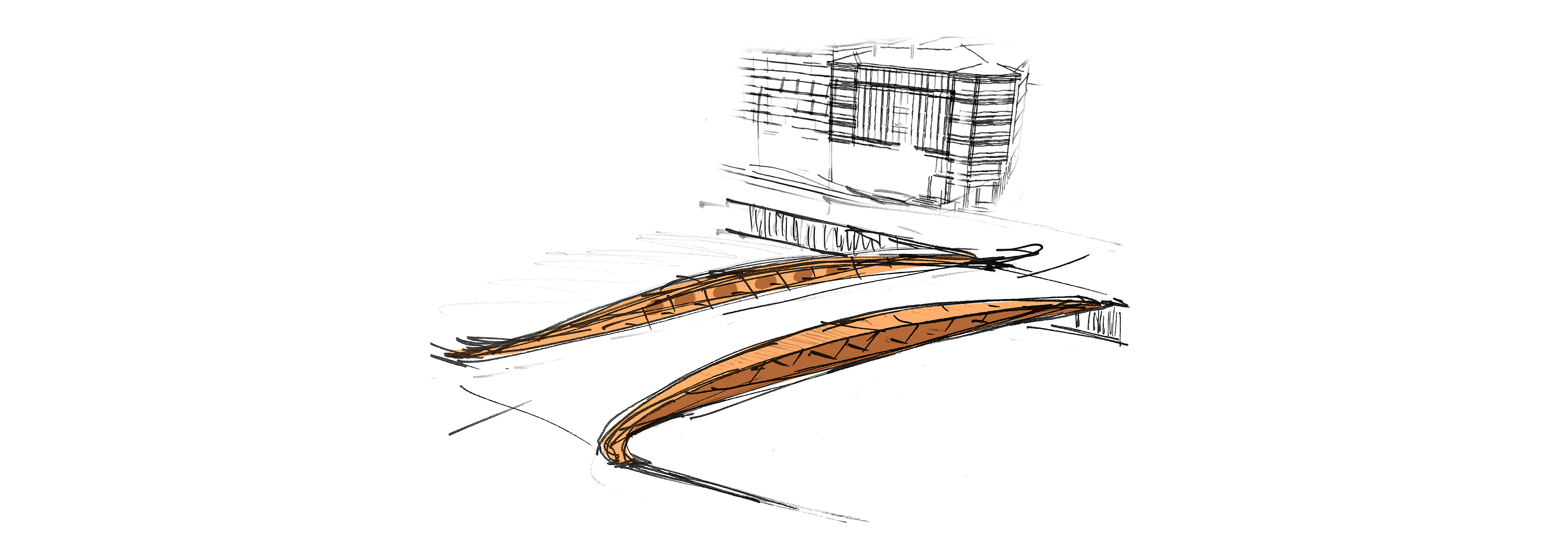
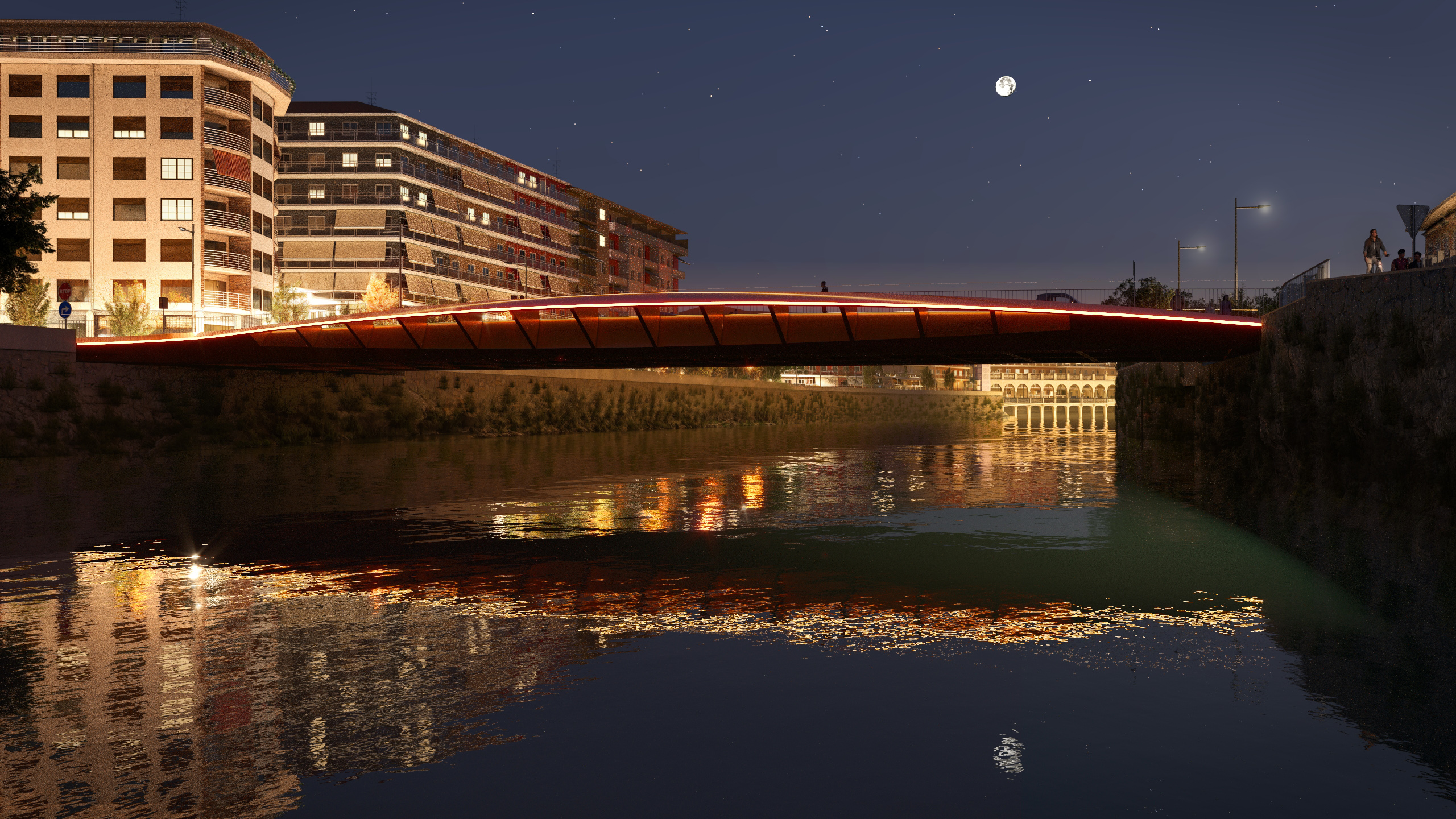
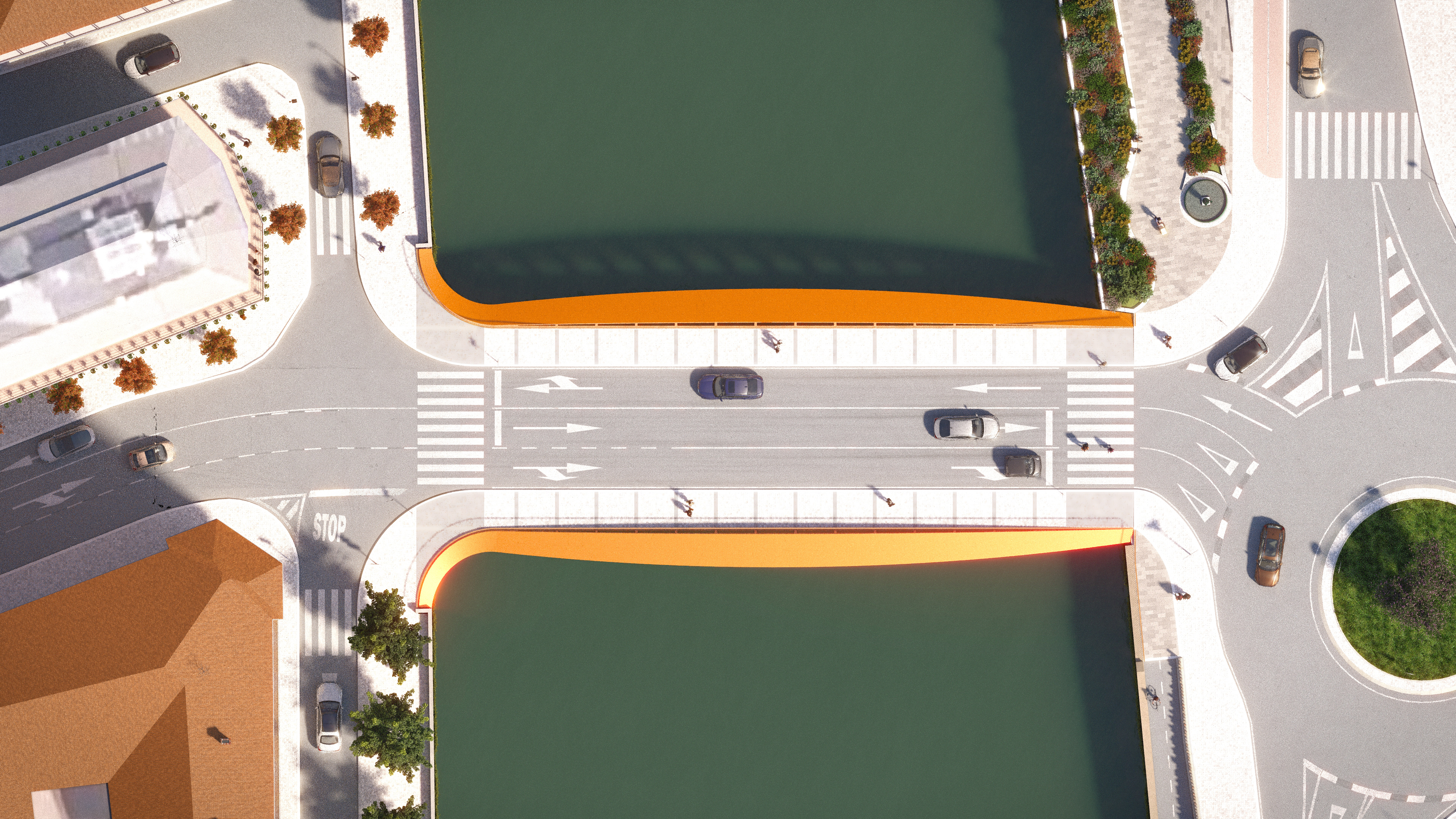
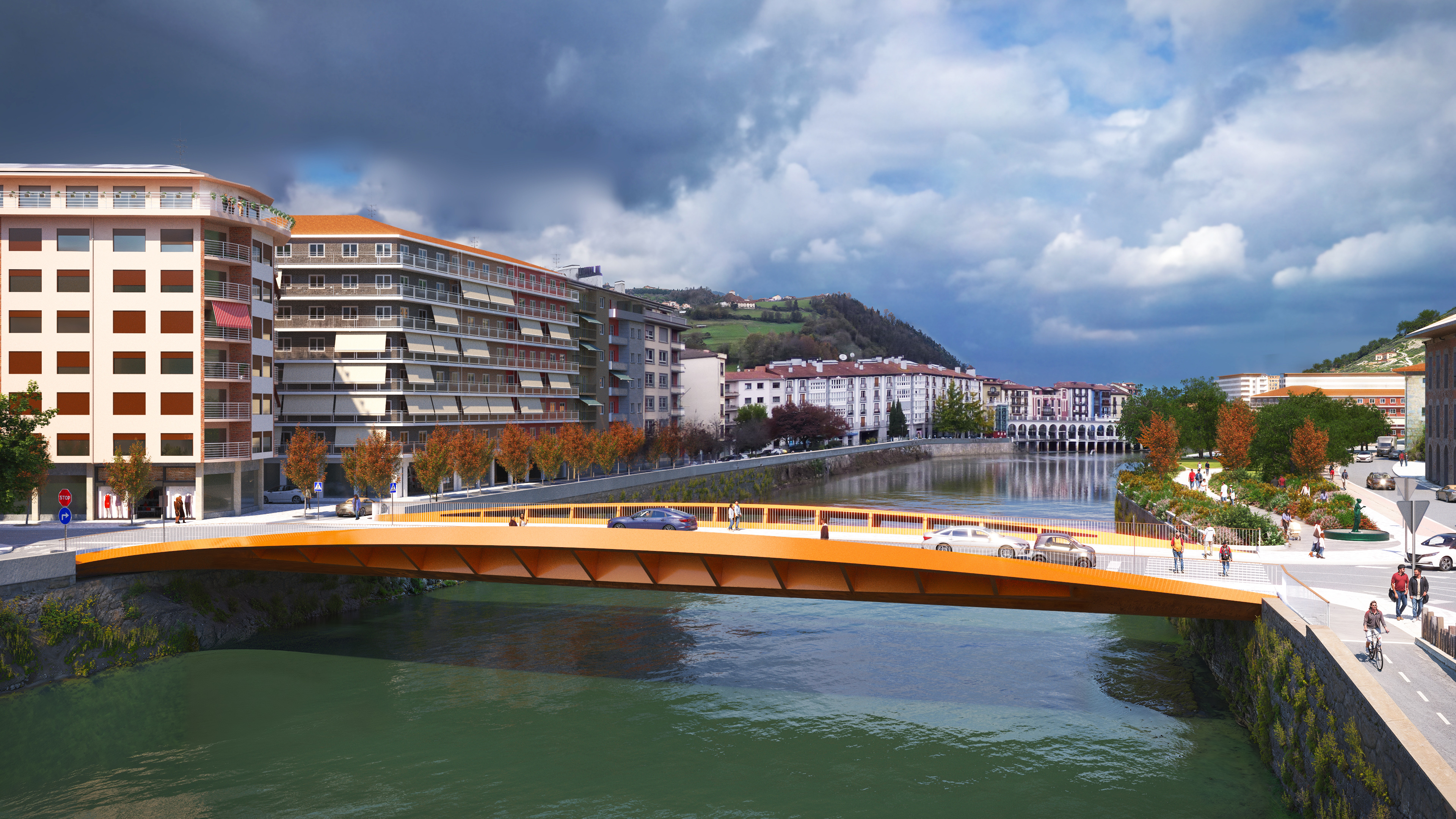
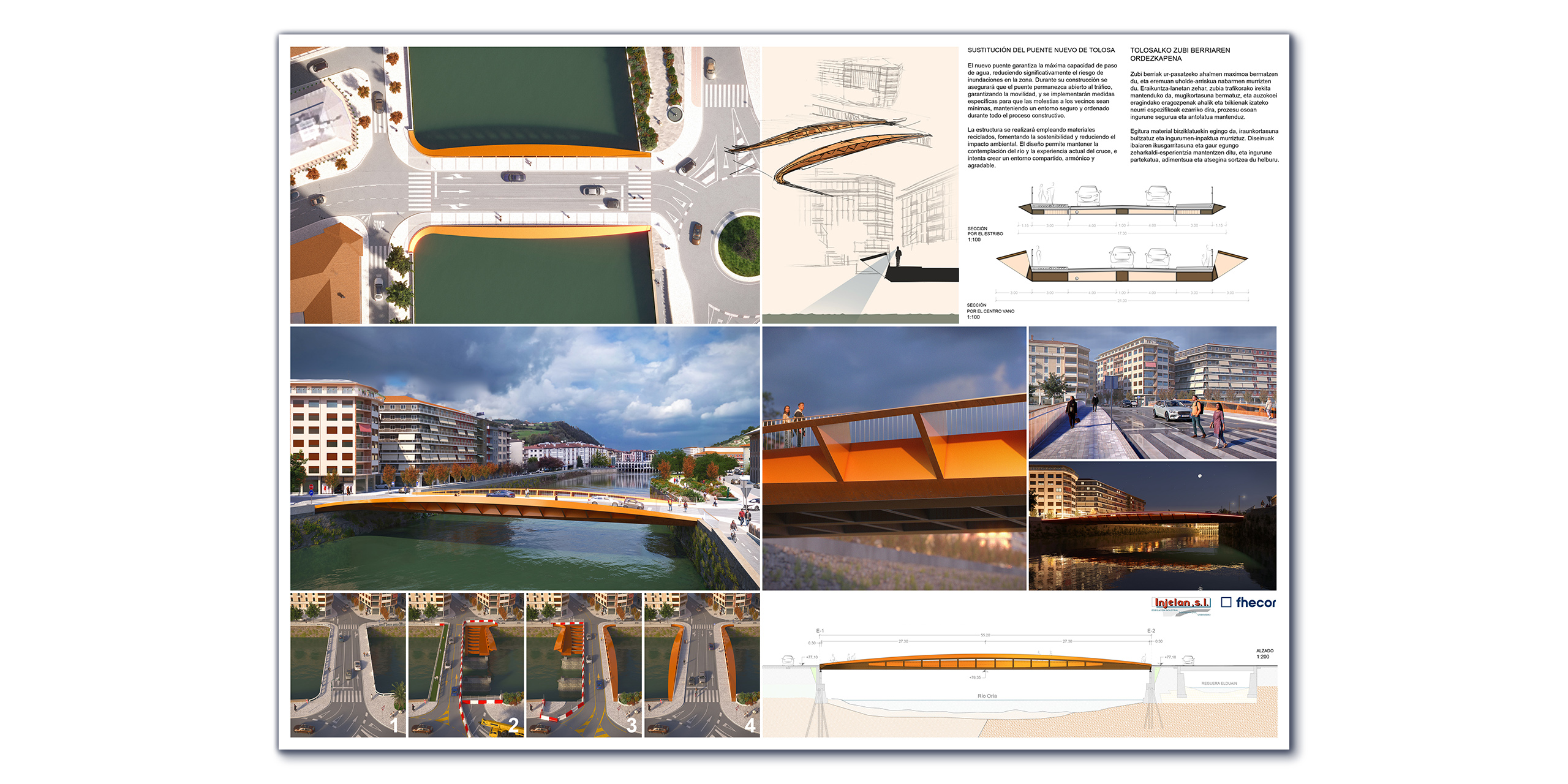
To replace the Puente Nuevo, INJELAN y FHECOR team proposed a single-span structure with a clear span of over 52 m, allowing it to cross the Oria River’s channel walls in this area. For the preliminary sizing of this solution, a free span of 53.00 m and a design span of 54.00 m (between supports) have been adopted.
Main Structural Elements
Pro
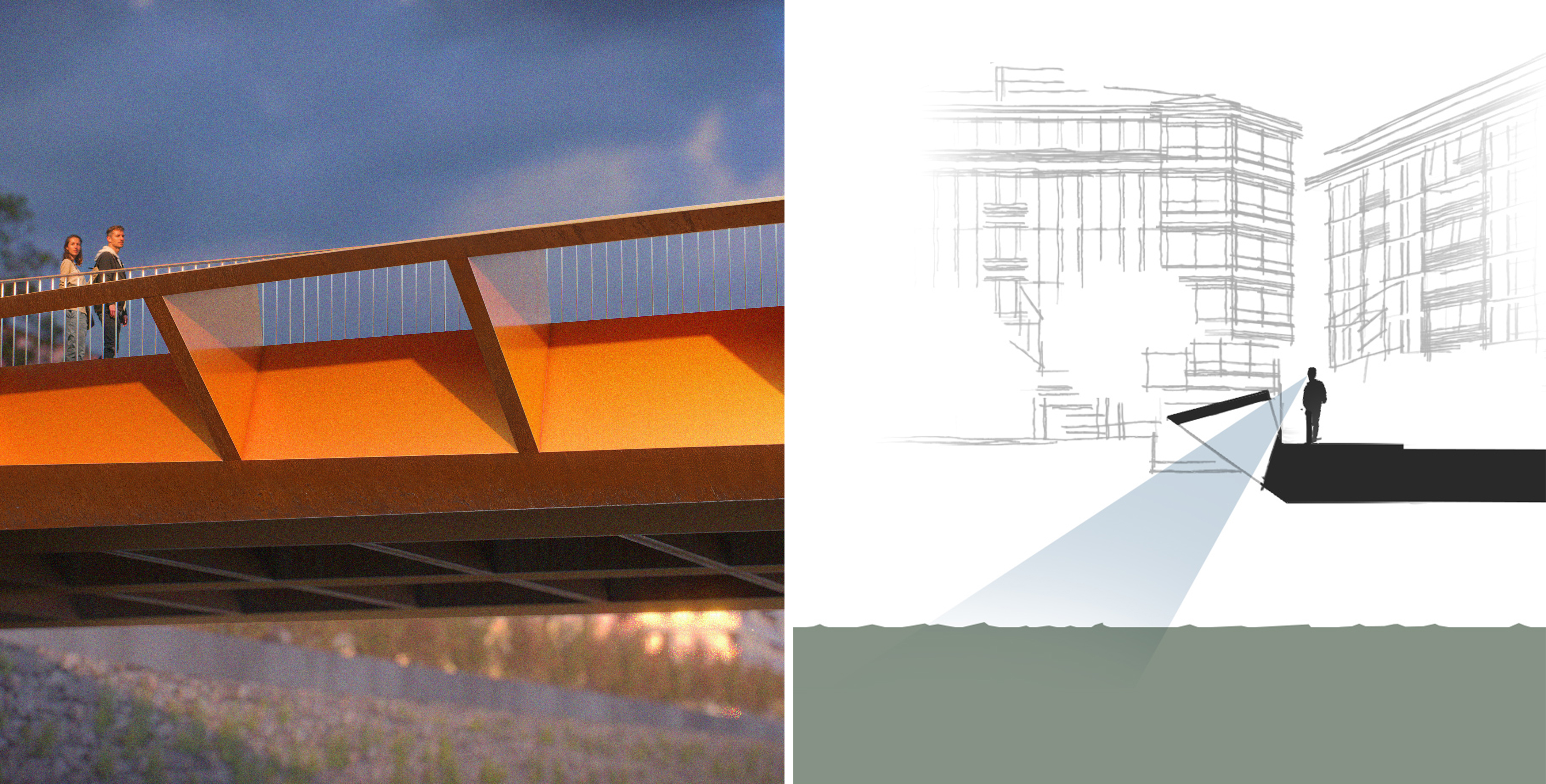
The deck is supported by two lateral steel beams with a variable depth: 0.90 m at the supports and 2.60 m at mid-span (depth-to-span ratio: L/20.75).
The deck consists of a grid of steel beams, with the lateral beams (variable depth, polygonal cross-section) as the primary elements.
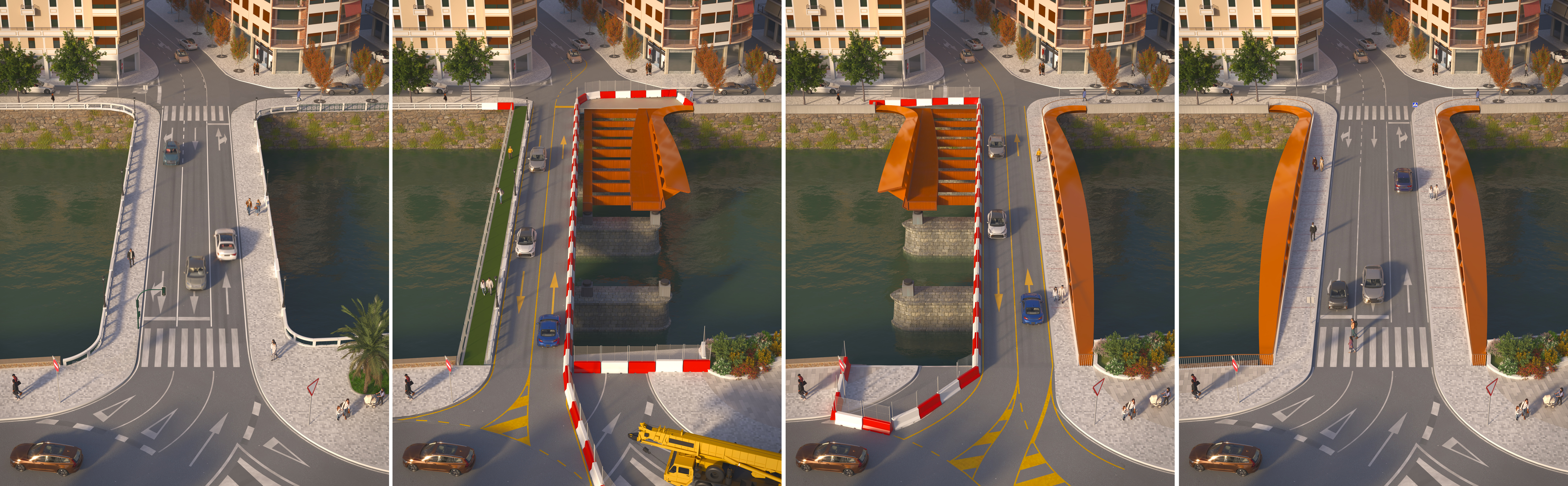
A third longitudinal beam with variable depth runs along the deck’s axis, allowing the deck to be constructed in two pieces while maintaining vehicular and pedestrian traffic throughout the construction.
Tolosa has forged its identity over eight centuries around the Oria River and its bridges. Among them all, the Puente Nuevo—inaugurated on February 12, 1926—holds a privileged place not only due to its historical significance but also for its pivotal role in the urban modernization and consolidation of Tolosa as a regional mobility hub during the industrial boom of the early 20th century.

Designed by architect Guillermo Eizaguirre with a groundbreaking design for its time, the Puente Nuevo (originally called Puente de la Travesía or Puente de los Fueros) features a reinforced concrete structure with four spans of 12.75 m each (total length: 51 m). However, the same design that provided functionality in 1926 has become its main limitation in the 21st century. Built without sufficient hydraulic capacity for extreme flooding, recent hydraulic studies by the Basque Water Agency (URA) show that the bridge acts as a funnel, exacerbating recurrent floods in the urban core.
Proposed Replacement Structure:
To replace the Puente Nuevo, INJELAN y FHECOR team proposed a single-span structure with a clear span of over 52 m, allowing it to cross the Oria River’s channel walls in this area. For the preliminary sizing of this solution, a free span of 53.00 m and a design span of 54.00 m (between supports) have been adopted.
Main Structural Elements

The deck is supported by two lateral steel beams with a variable depth: 0.90 m at the supports and 2.60 m at mid-span (depth-to-span ratio: L/20.75).
The deck consists of a grid of steel beams, with the lateral beams (variable depth, polygonal cross-section) as the primary elements.
A third longitudinal beam with variable depth runs along the deck’s axis, allowing the deck to be constructed in two pieces while maintaining vehicular and pedestrian traffic throughout the construction.
Replacement of the Puente Nuevo over the Oria River
Tolosa, Spain
Structural typology Tender Design
Date November, 2025
Scope Tender design
Design fhecor
Tolosa has forged its identity over eight centuries around the Oria River and its bridges. Among them all, the Puente Nuevo—inaugurated on February 12, 1926—holds a privileged place not only due to its historical significance but also for its pivotal role in the urban modernization and consolidation of Tolosa as a regional mobility hub during the industrial boom of the early 20th century.

Designed by architect Guillermo Eizaguirre with a groundbreaking design for its time, the Puente Nuevo (originally called Puente de la Travesía or Puente de los Fueros) features a reinforced concrete structure with four spans of 12.75 m each (total length: 51 m). However, the same design that provided functionality in 1926 has become its main limitation in the 21st century. Built without sufficient hydraulic capacity for extreme flooding, recent hydraulic studies by the Basque Water Agency (URA) show that the bridge acts as a funnel, exacerbating recurrent floods in the urban core.

Proposed Replacement Structure:
To replace the Puente Nuevo, INJELAN y FHECOR team proposed a single-span structure with a clear span of over 52 m, allowing it to cross the Oria River’s channel walls in this area. For the preliminary sizing of this solution, a free span of 53.00 m and a design span of 54.00 m (between supports) have been adopted.
Main Structural Elements
The deck is supported by two lateral steel beams with a variable depth: 0.90 m at the supports and 2.60 m at mid-span (depth-to-span ratio: L/20.75).
The deck consists of a grid of steel beams, with the lateral beams (variable depth, polygonal cross-section) as the primary elements.
A third longitudinal beam with variable depth runs along the deck’s axis, allowing the deck to be constructed in two pieces while maintaining vehicular and pedestrian traffic throughout the construction.
panel_11050.jpg
croquis_11056.jpg
compo1_11057.jpg
noche_11051.jpg
Planta_11053.jpg
compo2_11052.jpg
location
Related projects